What Makes a Specialty Coffee Cart: Why Equipment and Quality Standards Matter at Events in Los Angeles
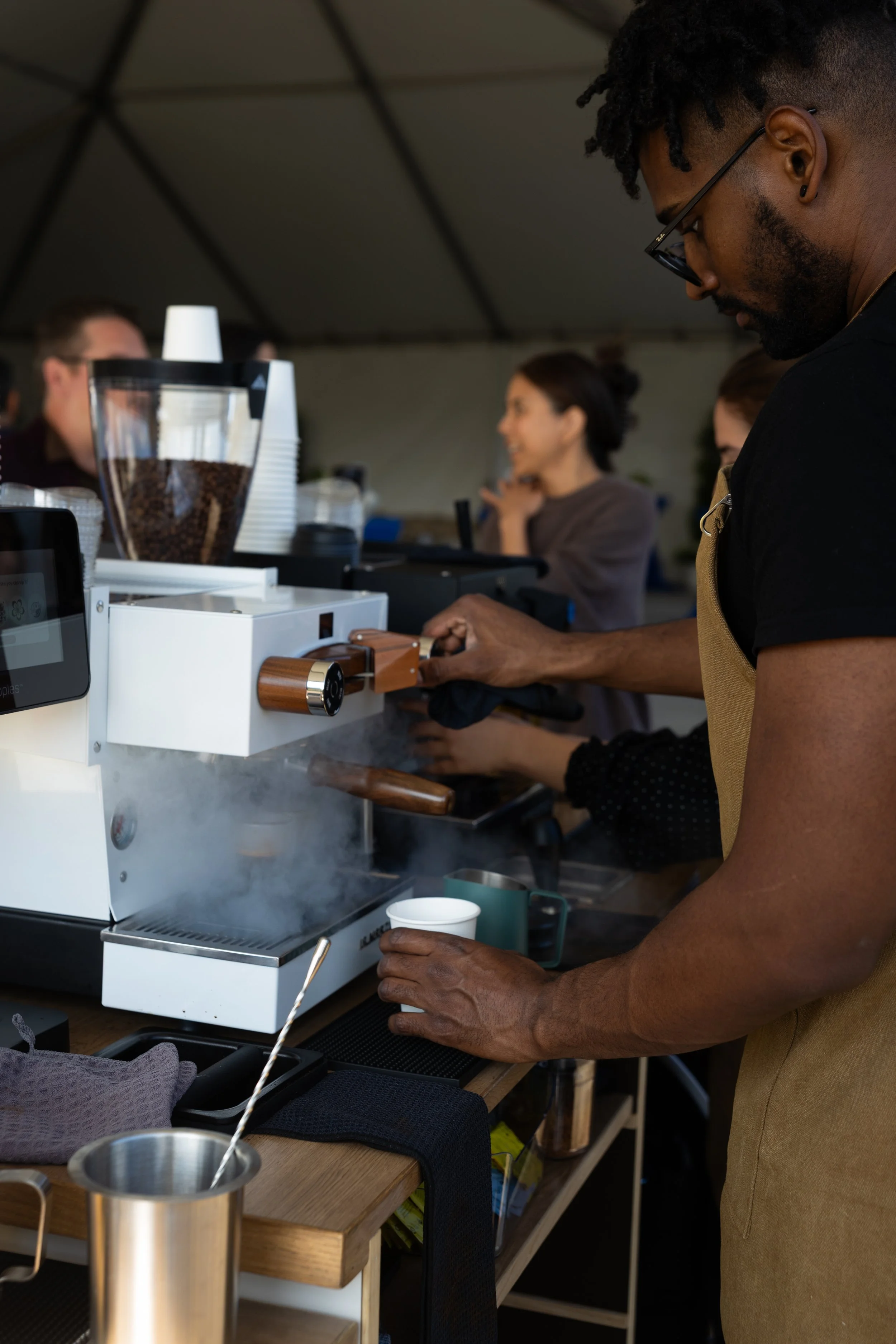
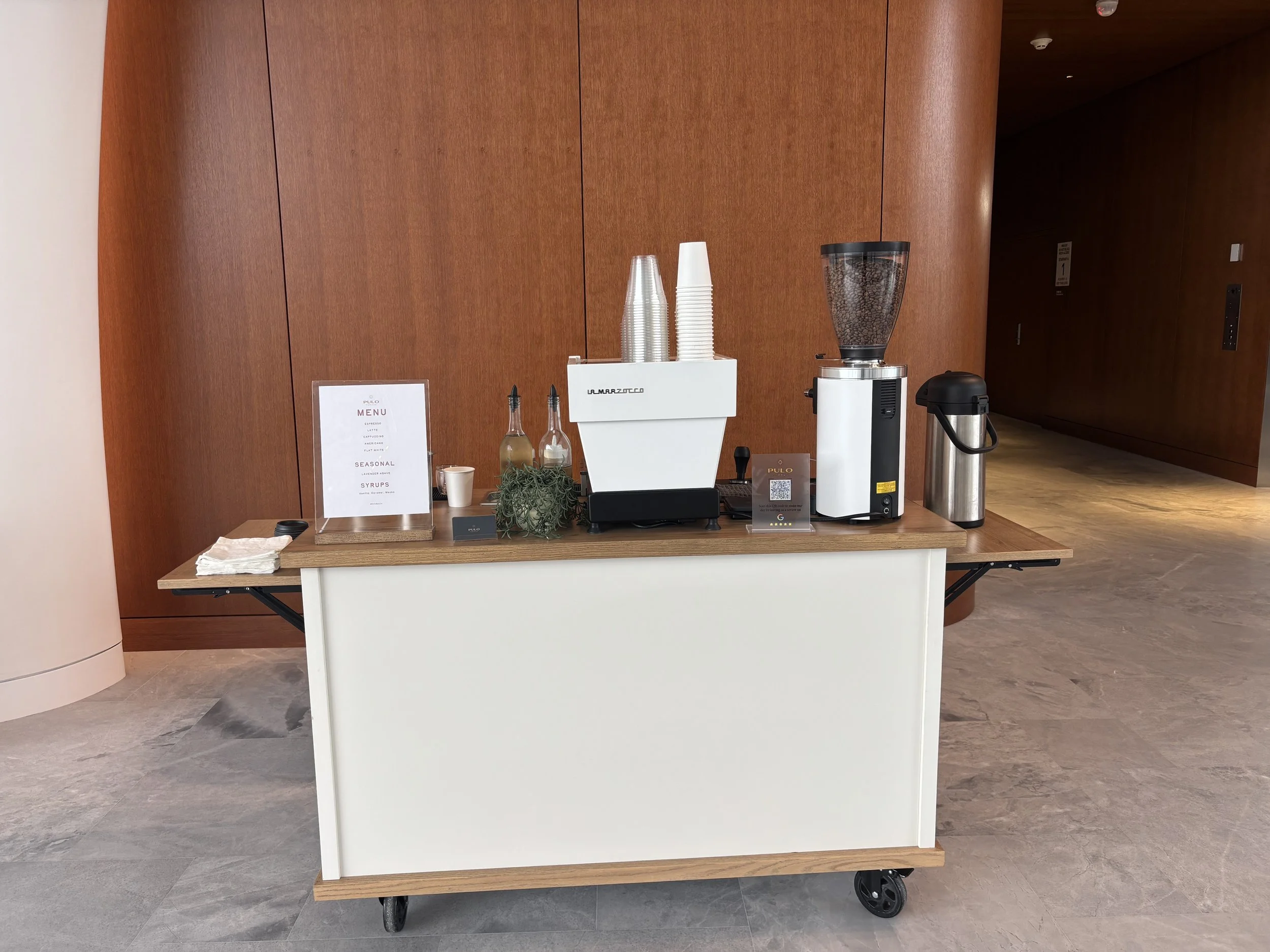
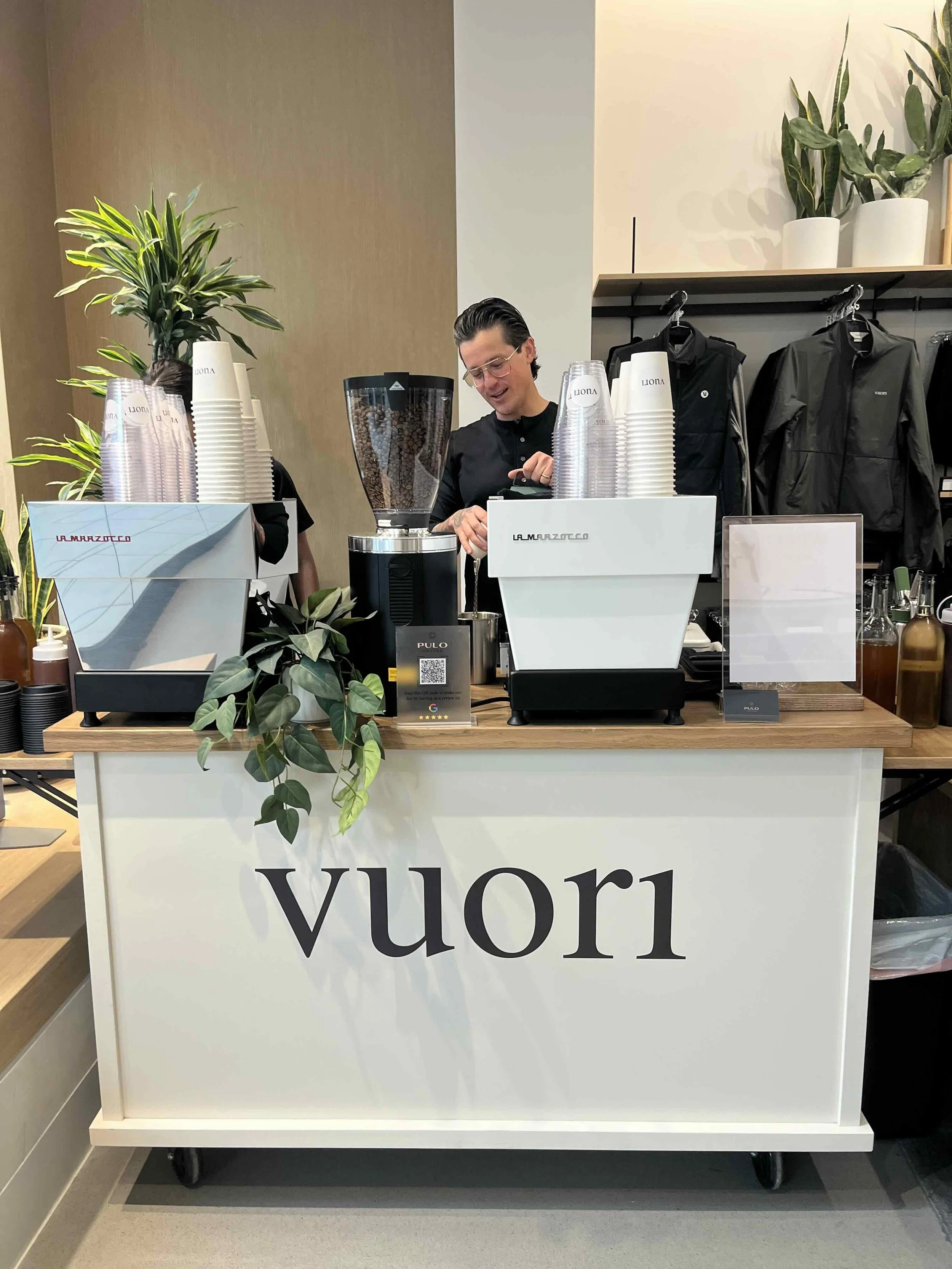
At events across Los Angeles, two things consistently get noticed at our cart. The La Marzocco machine and whether the coffee is actually good. For a lot of guests, seeing a La Marzocco is the first signal that both answers are yes.
Here's what actually goes into a specialty coffee cart and why it makes a difference at every event we serve.
What Is a Specialty Coffee Cart and How Is It Different From Standard Event Coffee
Specialty coffee has a specific definition. According to the Specialty Coffee Association, coffee must score 80 points or above on a 100-point cupping scale to qualify as specialty grade. Coffee scoring below 80 is classified as commodity or commercial grade. That distinction matters because most standard event coffee falls into the commodity category, pre-ground, pre-portioned, or brewed in bulk with no attention to extraction, temperature, or freshness.
A specialty coffee cart starts from a different place entirely. The difference comes down to four things: professional grade equipment, freshly locally roasted specialty beans, trained professional baristas, and a menu built around craft rather than convenience. Each of those four elements determines what ends up in the cup. Remove any one of them and the result drops.
Why the Espresso Machine at Your Event Actually Matters
Most event planners don't specify the equipment when they book a coffee cart. Most guests don't know the machine by name. But in Los Angeles, a city with one of the most coffee-literate populations in the country, the La Marzocco gets recognized.
A client told us once that the coffee cart they hired for a previous event showed up with a Nespresso machine. They said it scarred them. After that they made a point to ask about equipment before booking anyone.
Guests walk up to the cart, see the machine, and say something. They want one for their home. They tell their colleague that the coffee is going to be good before they've even ordered. That recognition is a proxy quality signal. The La Marzocco tells a knowledgeable guest that whoever is running this cart takes the coffee seriously.
The reason the machine matters beyond brand recognition is precision. The La Marzocco Linea Mini uses dual boiler technology to maintain separate temperature control for brewing and steaming simultaneously. That stability produces consistent extraction shot after shot, which matters at a corporate conference where your barista is pulling back-to-back drinks for an hour straight. A consumer or mid-grade commercial machine can't sustain that consistency under volume. When the machine struggles to recover between shots, guests wait. Lines form. The experience breaks down before the coffee even reaches their hand. It's one of the reasons equipment planning is part of every conversation we have before a multi-day conference or large scale event.
Pulo Coffee runs three La Marzocco Linea Minis across our events. That means whether you're booking one cart or two, the equipment standard doesn't change.
Why the Quality of Your Event Coffee Starts With the Beans
The best machine in the world can't fix bad beans. Equipment determines the ceiling of what's possible. The beans determine whether you reach it.
Most coffee served at catered events is commodity grade, sourced for price and volume, not quality. It never goes through the sensory evaluation that separates specialty from standard. That gap shows up in the cup every time.
Pulo Coffee sources beans from Be Bright Coffee, a specialty roaster on Melrose Avenue in Los Angeles. Founded by Frank La and his wife Michelle, Be Bright has built one of the most credentialed roasting operations in Southern California. Frank La placed 3rd at the 2022 US Roaster Championships, took 2nd at the 2025 US Brewers Cup, and won the 2021 US Cold Brew Championship, credentials covered extensively by Sprudge, the leading specialty coffee publication. Be Bright's house blend, Daydreamer, recently earned a Great Taste Award, one of the most recognized international food and drink quality accolades, for its product quality specifically.
Frank La's approach to coffee is guided by the Japanese concept of kodawari, the pursuit of perfection. Be Bright roasts their beans every Tuesday in Los Angeles. That same intentionality carries into how we build our seasonal drink menu every quarter, starting with what the beans can do and building the menu around that.
How Trained Professional Baristas Make the Difference at Any Event
Great equipment and great beans get you most of the way there. The barista closes the gap.
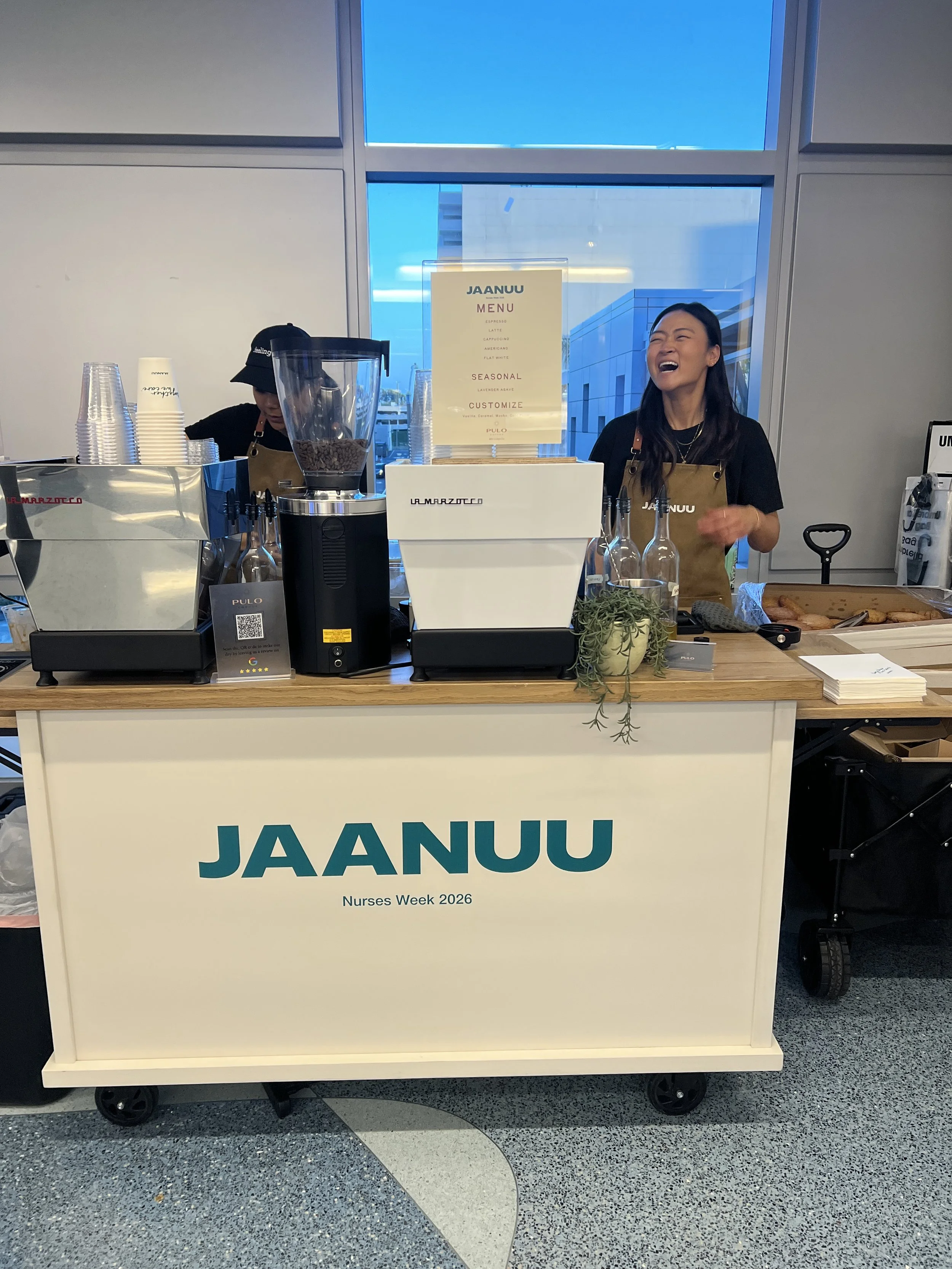
Pulling a consistent espresso shot requires dialing in the grind, managing extraction time, monitoring temperature, and adjusting in real time based on how the coffee is responding. At a busy corporate conference or brand activation with 200 guests cycling through in 45 minutes, that skill has to hold under pressure. A barista who can do that while maintaining latte art quality, reading the line, and keeping guest interactions warm is a different kind of professional than someone operating a pod machine.
What to Look For When Hiring a Specialty Coffee Cart in Los Angeles
Not every coffee cart that calls itself specialty actually is. Here are the questions worth asking before you book:
What espresso machine do you use? The equipment should be commercial grade. A home or consumer machine at a professional event is a red flag, and any experienced operator should be able to name their equipment without hesitation.
Where do your beans come from? Fresh, locally roasted specialty beans make a meaningful difference in the cup. Ask when they were roasted. Specialty beans are at their peak between 7 and 21 days after roasting. If they can't tell you the roast date or the answer is months ago, that's your answer.
How do your baristas handle high volume? Ask about their largest events and how they've managed busy service windows. An experienced team has systems for this. An inexperienced one will figure it out at your event.
Do you offer custom branding? Experienced operators will know their production timelines, have a clear process for approvals, and be able to show you examples of past work. If the answer is vague or they're figuring it out as they talk, that tells you something. Custom cart wraps, branded cups, and latte art printing turn a coffee service into a brand experience. You can see what that looks like in practice from our PacSun x Adidas activation at Fashion Island.
What does your menu actually include? A specialty cart should offer more than a vanilla latte. Homemade syrups, oat milk, cold brew on tap, and seasonal signature drinks are signs of a menu built with intention.
Looking for a specialty coffee cart for your next event in Los Angeles? Request a quote and let's talk about what we bring to every event.
